


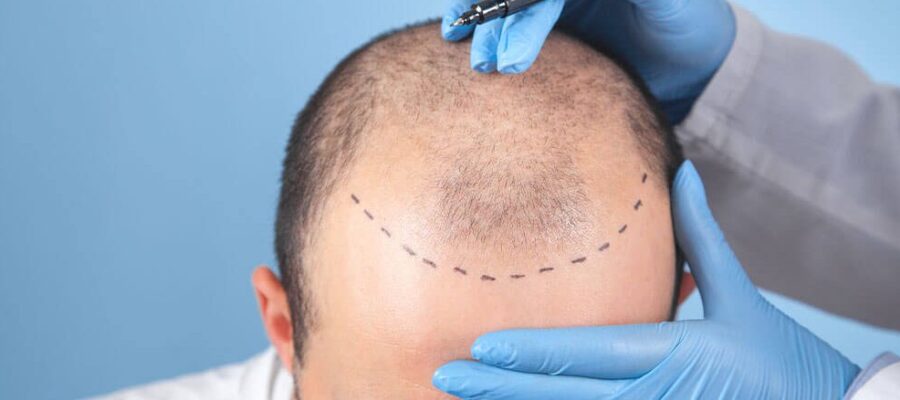
DHI hair transplant (Direct Hair Implantation) is today one of the most innovative and precise techniques in hair restoration. Unlike traditional methods, DHI hair transplant allows the direct implantation of follicles without the need for prior incisions, thus offering a more natural result and faster recovery. This method, particularly appreciated for its finesse and effectiveness, is suitable for both men and women who suffer from localized or diffuse hair loss.
DHI Hair Transplant: What Is It?
DHI hair transplant (Direct Hair Implantation) is a revolutionary hair transplantation method that stands out for its precision and natural results. Unlike traditional techniques, DHI hair transplant makes it possible to implant the follicles directly into the scalp, without prior incisions or channels. This advanced approach has become the standard for people who want to restore their hair density in a discreet, fast and effective way.
Thanks to the use of a special implanter pen, each follicle is inserted one by one at the angle, depth and in the natural direction of the hair. This technique offers unmatched customization of the result, which makes it one of the most sought after options, especially for those who are looking for a harmonious outcome that is very difficult to detect with the naked eye.
How Does the DHI Technique Work?
The DHI technique is based on a process in two main steps: extraction and direct implantation. First, the hair follicles are extracted one by one from the donor area, usually located at the back of the head, using a very fine micro punch. This step is similar to the one used in the FUE method.
The real innovation of DHI hair transplant lies in the implantation. With a Choi type implanter pen, the practitioner inserts the follicles directly into the recipient area without having to create openings or channels beforehand. This allows complete control over the angle, direction and depth of each implanted hair, ensuring a more natural and dense result.
Moreover, since it is not necessary to shave the whole head, DHI is particularly suitable for women and for men who want a discreet procedure. The precision of this method reduces trauma to the scalp, speeds up healing and improves the survival rate of the grafts.
Difference Between DHI and FUE: Which One to Choose?
The comparison between DHI hair transplant and the FUE method (Follicular Unit Extraction) is common, because these two modern techniques are both based on similar follicular extraction. However, they differ significantly in their implantation method and in their results.
Here are the main differences between the two:
- Implantation: In FUE, the grafts are inserted manually into channels that have been opened beforehand in the scalp. In DHI, the grafts are implanted directly using an implanter pen, without incision.
- Precision: DHI allows finer control over the direction and angle of the hair, which supports a more natural result.
- Healing: Thanks to its less invasive approach, DHI causes less trauma and allows faster recovery.
- Shaving: In FUE, shaving the entire head is often necessary. DHI, on the other hand, can be performed without shaving the recipient area, which is a major advantage for many patients.
- Length of the procedure: DHI generally takes more time because of the meticulous implantation.
The choice between FUE and DHI depends on the type of hair loss, aesthetic preferences, lifestyle and budget. A personalized consultation with a specialist is essential to determine the method that best suits your needs.
Advantages of DHI Hair Transplant
DHI hair transplant offers many advantages that explain its growing popularity among patients who are looking for a lasting and aesthetic solution to hair loss.
Here are its main strengths:
- Natural result: Thanks to the controlled implantation of the follicles, the hair grows back in the natural direction, creating a smooth appearance.
- No visible scars: No stitches or linear scar, which makes it an ideal solution for those who wear short hair.
- Fast recovery: The technique is less invasive, which reduces inflammation and speeds up healing.
- Suitable for women: Since it does not necessarily require shaving the head, it is perfectly suitable for women who want to keep their appearance.
- High density: The closer implantation allows effective coverage of bald areas, even in advanced loss.
- High graft survival rate: The implanter pen preserves the follicles better, increasing their ability to anchor and grow back in a lasting way.
These many benefits make DHI hair transplant one of the most effective solutions to regain dense, natural and long lasting hair.
Who Can Benefit From a DHI Hair Transplant?
DHI hair transplant is intended for a wide range of profiles, both men and women, who suffer from localized or diffuse hair loss. This technique is particularly suitable for those who are looking for a natural, discreet and personalized result.
The best candidates are generally:
- People who have sufficient density in the donor area (often the back or sides of the scalp).
- Women who want to avoid full shaving, since DHI allows implantation without a radical haircut.
- Patients with stabilized androgenetic alopecia.
- Those who have experienced hair loss due to scars, burns or surgical procedures.
- Individuals who are looking for hair densification without major change in their current appearance.
It is essential to carry out a full hair assessment with a specialist to confirm eligibility for a DHI hair transplant, because each case requires a personalized approach according to the aesthetic expectations and the condition of the scalp.
Steps of the DHI Procedure, From A to Z
DHI hair transplant follows a strict protocol in several steps, which ensures comfort, precision and safety.
Here is the complete course of the procedure:
Initial consultation
A hair examination is carried out to assess density, type of loss, the quality of the donor area and the expectations of the patient. A personalized plan is drawn up.
Preparation of the donor area
Only part of the donor area is shaved if necessary. A local anesthetic is applied to ensure a painless procedure.
Extraction of the follicles
With a micro punch, the follicles are extracted one by one, preserving their integrity and viability.
Preparation of the grafts
The extracted follicles are immediately kept in a specific solution to maximize their survival rate.
Direct implantation with the DHI pen
The grafts are inserted one by one into the bald areas using the Choi implanter pen. This step allows implantation at the ideal angle and depth, without prior incision.
Postoperative care
Detailed instructions are given for washing, protection and follow up. A medical check up is usually scheduled a few days later.
The whole process can last between 6 and 8 hours depending on the number of grafts to be implanted. Thanks to its precision, DHI hair transplant offers a well controlled surgical experience and highly aesthetic results.
Recovery Time and Visible Results
One of the main advantages of DHI hair transplant is the speed of recovery. Since the method is less invasive than classic techniques, side effects are limited and return to daily activities is fast.
Here are the main stages of recovery:
- Day 1 to 3: Redness and slight swelling appear. It is important to sleep with the head elevated and avoid touching the implanted areas.
- Day 4 to 7: The scabs formed around the grafts begin to fall off. The scalp starts to regain its normal appearance.
- Week 2 to 4: Temporary shedding of the implanted hair (effluvium), a normal phenomenon of the hair cycle.
- Month 3 to 6: First signs of regrowth. The hair appears finer at the beginning, then gains thickness.
- Month 6 to 12: Ongoing growth and improvement of density. The final result begins to stabilize.
- Month 12 to 18: Optimal density is reached and natural hair is fully visible.
Most patients can return to normal social and professional life from the third day. DHI hair transplant is therefore ideal for those who want a gradual transformation without long social downtime.
Possible Side Effects and Precautions to Take
Like any procedure, DHI hair transplant can lead to certain side effects, although the technique is considered one of the safest. These effects are usually temporary and easy to control.
Potential side effects:
- Temporary redness and swelling in the treated areas
- Feeling of tightness or itching
- Scabs around the implanted follicles
- Slight pain or discomfort in the donor area
- Temporary loss of transplanted hair (follicular shock)
Precautions to take to minimize risks:
- Follow strictly the postoperative instructions given by the clinic
- Avoid sun, excessive sweating and intense sports activities for two weeks
- Do not touch, scratch or wash the head vigorously during the first days
- Use the recommended products (gentle shampoo, antiseptic spray and others)
- Attend follow up appointments to assess regrowth and prevent any complication
Thanks to these simple precautions, the large majority of patients benefit from fast and complication free healing, which strengthens the excellent results of DHI hair transplant.
DHI Hair Transplant: Before and After and Testimonials
The before and after results of a DHI hair transplant often speak for themselves. Thanks to the precision of this technique, patients see a gradual but impressive transformation of their hair. Follicle by follicle implantation allows a natural hairline, even density and an aesthetic appearance that is hardly distinguishable from native hair.
Many testimonials highlight a significant improvement in self confidence and general well being. Patients report having regained their original appearance, sometimes even better than before hair loss. Some express their satisfaction as early as the first months, especially when they notice rapid regrowth and the absence of visible scars.
Testimonials also confirm the quality of the experience: the procedure is painless, recovery is fast and the results are long lasting. The return of dense hair, combined with serious medical support, makes DHI hair transplant a solution that is widely recommended by those who have tried it.
DHI for Men vs DHI for Women
Although DHI hair transplant is based on the same technical principles for both sexes, there are some important differences between the approaches in men and in women.
DHI for men
In men, hair loss is often localized (temples, crown) with well defined bald areas. DHI transplant makes it possible to redesign the frontal hairline, densify the affected areas and offer a permanent solution to androgenetic baldness. Full shaving is more common and accepted.
DHI for women
In women, loss is often diffuse, with overall thinning. DHI hair transplant is ideal because it allows targeted implantation without the need for full shaving, which is a major aesthetic advantage. The technique also offers subtle densification, adapted to female hair structure.
In both cases, the result is natural, but the treatment plan is personalized according to the type of loss, desired density and visual expectations. DHI hair transplant adapts perfectly to the anatomical and aesthetic features of each patient.
DHI Hair Transplant Price 2026
The price of a DHI hair transplant in 2026 depends on several key factors. Unlike classic techniques, DHI requires more time, more precision and the use of specific equipment (implanter pen), which can influence the total cost.
- The elements that make the price vary include:
- The number of grafts needed to reach the desired result
- The experience and reputation of the surgeon
- The country or city where the clinic is located
- The services included in the package (consultation, postoperative care, complementary treatments)
Some clinics offer « all inclusive » packages, while others charge each step separately. The price may also vary depending on whether the procedure is carried out in one or several sessions.
Frequently Asked Questions
What exactly is DHI hair transplant?
DHI hair transplant (Direct Hair Implantation) is an advanced hair transplantation method that allows follicles to be implanted directly into the scalp using an implanter pen. Unlike classic techniques, it does not require prior channels. This offers better control over the angle, depth and direction of the hair, ensuring a natural and dense result.
Is DHI more effective than FUE?
DHI hair transplant is not necessarily more effective than FUE, but it offers specific advantages depending on the profile of the patient. It allows more precise implantation, often without shaving, and supports faster recovery. FUE remains an excellent technique, but DHI is often preferred for its finesse and natural result, especially for women or for those who want a discreet solution.
How long does the DHI procedure last?
The length of a DHI hair transplant varies depending on the number of grafts to be implanted, but the procedure generally lasts between 6 and 8 hours. In some complex cases or when a large number of grafts are needed, the procedure can be divided into two sessions. Despite its length, the procedure is carried out under local anesthesia and is painless for the patient.
Are there scars with DHI transplant?
No, one of the main advantages of DHI hair transplant is that it does not leave visible scars. Since the follicles are extracted one by one with a micro punch and implanted directly without incisions, there is no linear trace. Small redness can appear temporarily, but it disappears in a few days, leaving a perfectly natural scalp.
Is DHI transplant painful?
DHI hair transplant is carried out under local anesthesia, which makes it completely painless during the procedure. After the operation, slight discomfort or sensitivity may appear, especially in the donor area. However, these sensations are usually mild and are well controlled with prescribed medication.
When are the results seen after a DHI transplant?
The results of a DHI hair transplant appear gradually. Temporary shedding of the implanted hair occurs around the third week (telogen effluvium), then regrowth starts between the third and fourth month. Density becomes visible from the sixth month, and the final result is usually reached between 12 and 18 months after the transplant.
What density is achieved with DHI?
DHI hair transplant allows very dense implantation thanks to the precision of the implanter pen. On average, between 40 and 60 follicles per square centimeter can be implanted, depending on the quality of the scalp and the natural density desired. This makes it possible to recreate uniform and natural hair, even in very sparse areas.
Can you have a DHI transplant if you are young?
Yes, but with caution. A DHI hair transplant can be considered in young patients provided that their hair loss is well assessed and stabilized. It is important not to intervene too early, because active loss could affect the durability of the results. A medical diagnosis is essential to decide on the right time to intervene.
What is the average price of a DHI transplant in 2026?
The average cost of a DHI hair transplant in 2026 depends on several criteria: the number of grafts, the reputation of the surgeon, the exact technique used and the services included in the package. It is therefore difficult to give a fixed price without personalized evaluation. For DHI hair transplant prices, contact us right away.
Is DHI suitable for women?
Yes, DHI hair transplant is particularly well suited to women. It allows precise implantation without having to shave the whole head, which is a major aesthetic advantage. In addition, DHI is effective in treating diffuse alopecia, which is common in women, while preserving the natural look of the hair.